Understanding Preventive Maintenance
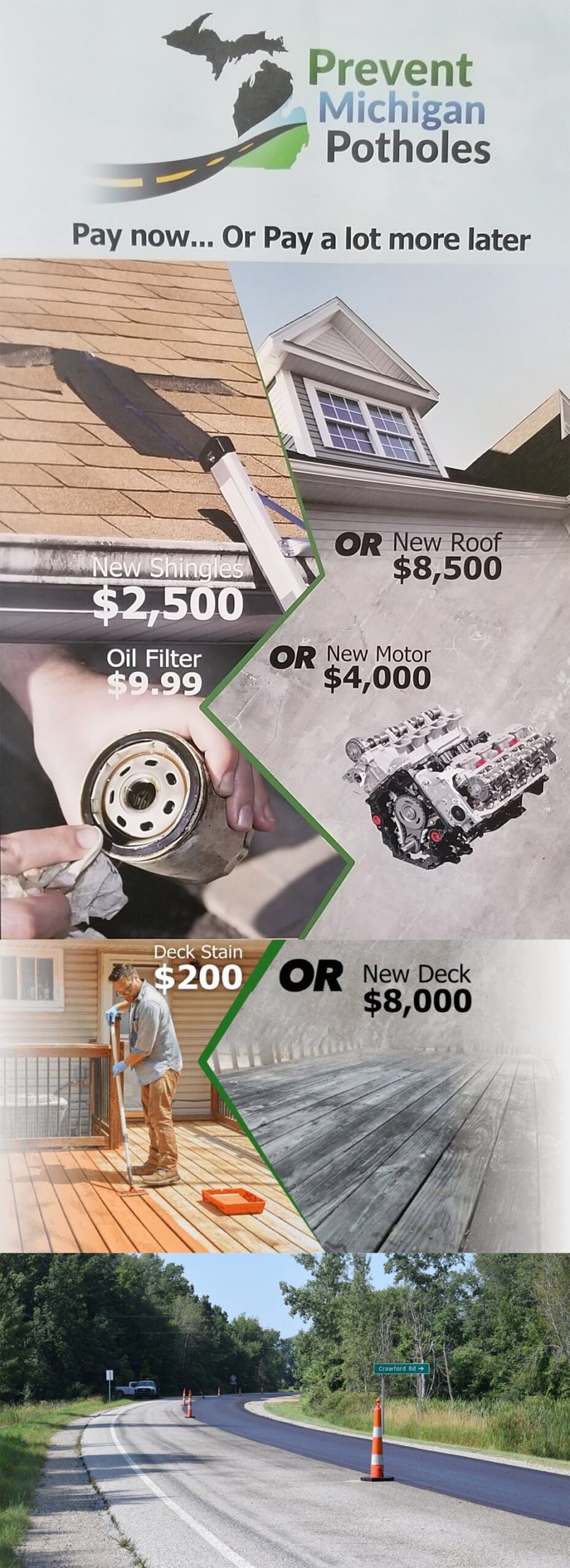
Preventive maintenance is the planned treatment of existing pavements designed to protect the road surface by decreasing the rate of deterioration. These treatments can add 5 to 10 years to a pavement’s service life when applied at the right time. Just like your home may need new shingles to keep water from damaging the roof beneath, preventive maintenance treatments both improve a road’s condition and prevent water from getting below the pavement and causing potholes to form.
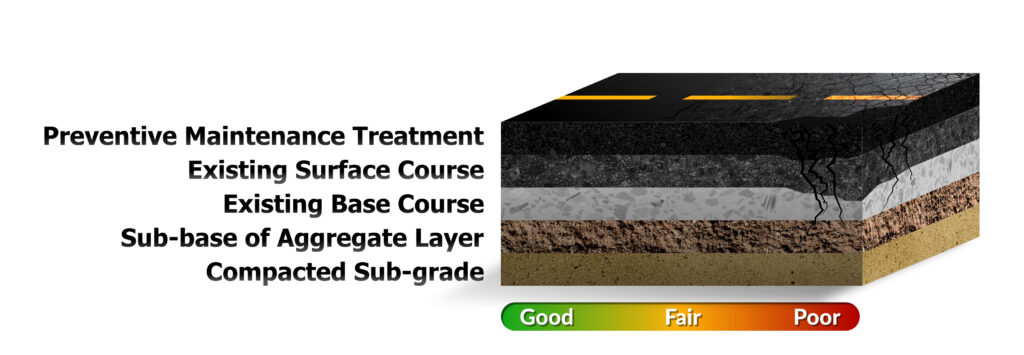
It’s important to understand that preventive maintenance is not patching potholes—it’s preventing them from forming in the first place. Every pothole begins as a crack in the pavement surface, and if left untreated, those cracks allow water infiltration that leads to deterioration, potholes, and eventually major pavement failure.
Preventive maintenance treatments are intended to improve or maintain a road in good or fair condition, extending the number of years a road can serve the motoring public. The number of years a surface treatment adds to the pavement’s life is directly related to the condition of the pavement being treated. That’s why it’s so important to treat roads while they’re still in good condition—waiting until significant deterioration occurs dramatically reduces the effectiveness and lifespan of any treatment.
The Right Treatment at the Right Time
Michigan is a national leader in pavement preservation—the practice of strategically using preventive maintenance treatments to extend pavement life. The goal of pavement preservation is to place the right treatment on the right road at the right time, every time.
Achieving this goal with limited dollars available to Michigan road agencies requires a long-term planning approach, dedication, and the funding to make the best choices for every road at the right time. The difference in outcomes is dramatic: the traditional “worst first” strategy typically yields a 20-year average lifespan for paved roads, while using preventive maintenance extends that lifespan to 40 years or more.
Making the Case to the Public
Road agencies often face questions from motorists who don’t understand why treatments are being applied to roads that appear to be in good condition, or why a recently paved road needs attention when others are falling apart.
The public can also mistake new surface treatments (new shingles on the roof) for new construction. This can cause frustration as the public may not understand that cracks will eventually reflect through any new surface.
Educating the public is essential to build support for preservation programs. When motorists understand that preventive maintenance treatments are as essential to the pavement as oil changes are to a vehicle’s engine, they better appreciate the value of treating good roads to keep them good.
Pavement preservation protects both roads and budgets, keeping good roads good and preventing the costly cycle of deterioration that leads to Michigan’s notorious potholes. Investing in pavement preservation is pothole prevention!